Years ago, in the days of analog photography, Natalia Teteriatnikov entered the photographic archive of the Istanbul Department of the German Archaeological Institute in a rather challenging situation. She had come to the Institute seeking advice to continue her research. As a young scholar at the start of her scientific journey, she would one day devote her life to Byzantine art and uncover the hidden layers of Hagia Sophia. The archive was not merely a place where photographs were stored; it was also a photographic workshop where prints were developed in the darkroom. She was welcomed by Wolf Schiele, who had worked at the German Archaeological Institute as a photographer between 1965 and 1992 and, as Natalia later told us, had earned a reputation as one of Istanbul’s finest photographers. Some encounters remain unforgettable.
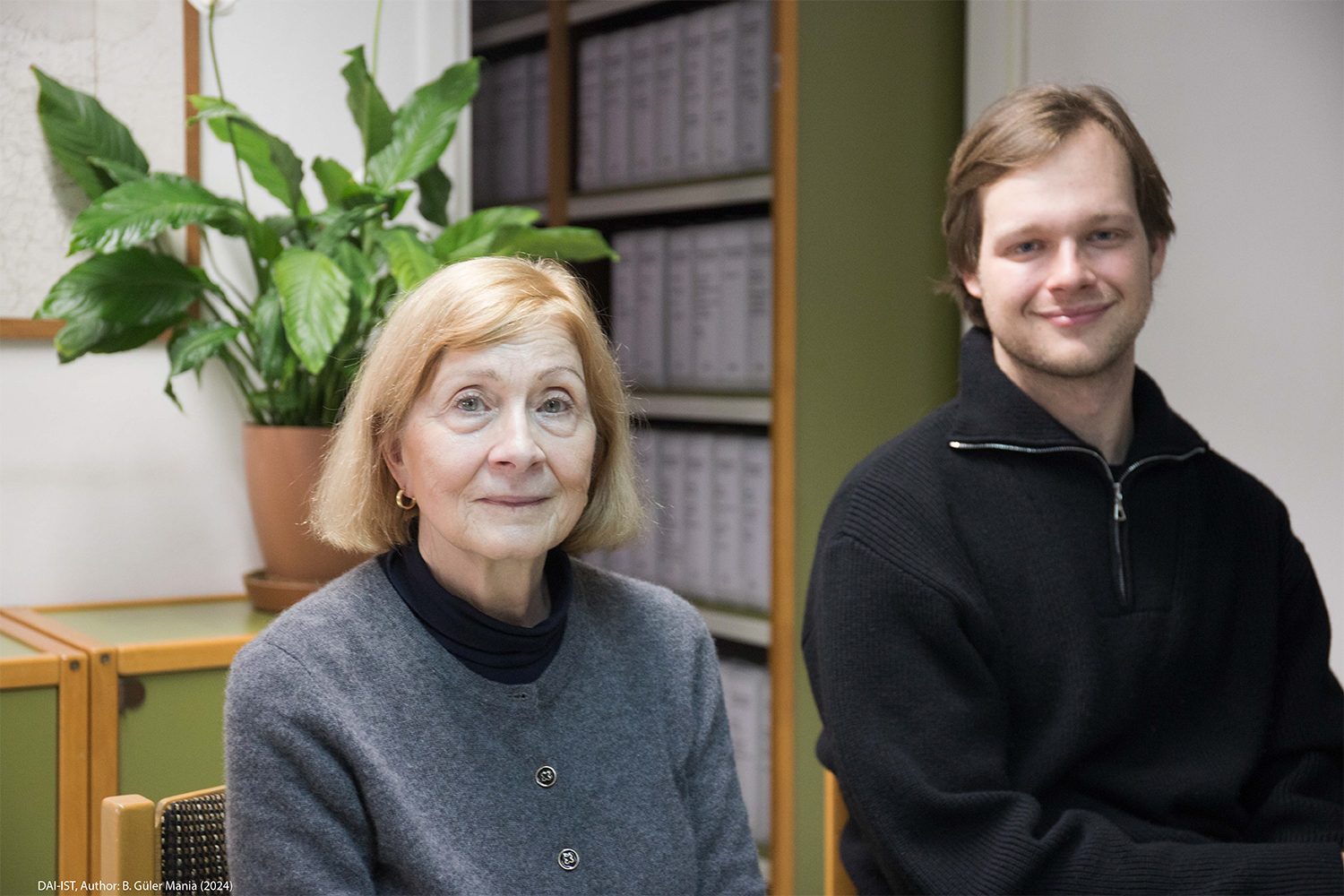
Natalia, accompanied by her grandson Alexander Teteriatnikov, on the day they visited our archive (DAI-IST, Author: B. Güler Mania 2025)
When Natalia recounted the day she met Schiele, we asked her to put this cherished memory into writing. In doing so, we wished to remember once more Wolf Schiele, whom we lost last year, and his late wife, Renate Schiele — also a photographer and a passionate lover of Istanbul. These two devoted photographers made a significant contribution to our archive through the thousands of images they produced. With the comprehensive collection they left behind, reflecting Türkiye’s archaeological, urban, and cultural heritage, they continue to illuminate the path for researchers.
Natalia Teteriatnikov has published extensively on Byzantine art and served for twenty-one years as a curator at Dumbarton Oaks. Thanks to her still vibrant scholarly curiosity, she visited our archive again in 2024, accompanied by her grandchild.
B. Güler Mania
Wolf Schiele’s Contribution to My Photography of Cappadocian Churches
I first met Wolf Schiele at the German Archaeological Institute in Istanbul in early summer of 1982. At that time I was a PhD student at The Institute of Fine Arts, New York University. The subject of my dissertation was Liturgical Planning of Cappadocian Churches and the adviser for my dissertation was Prof. Thomas Mathews. After obtaining a permit to work and photograph churches in Cappadocia, I arrive in Göreme, where I stayed for the summer and made excursions to various sites to photograph rock-cut churches in the area.
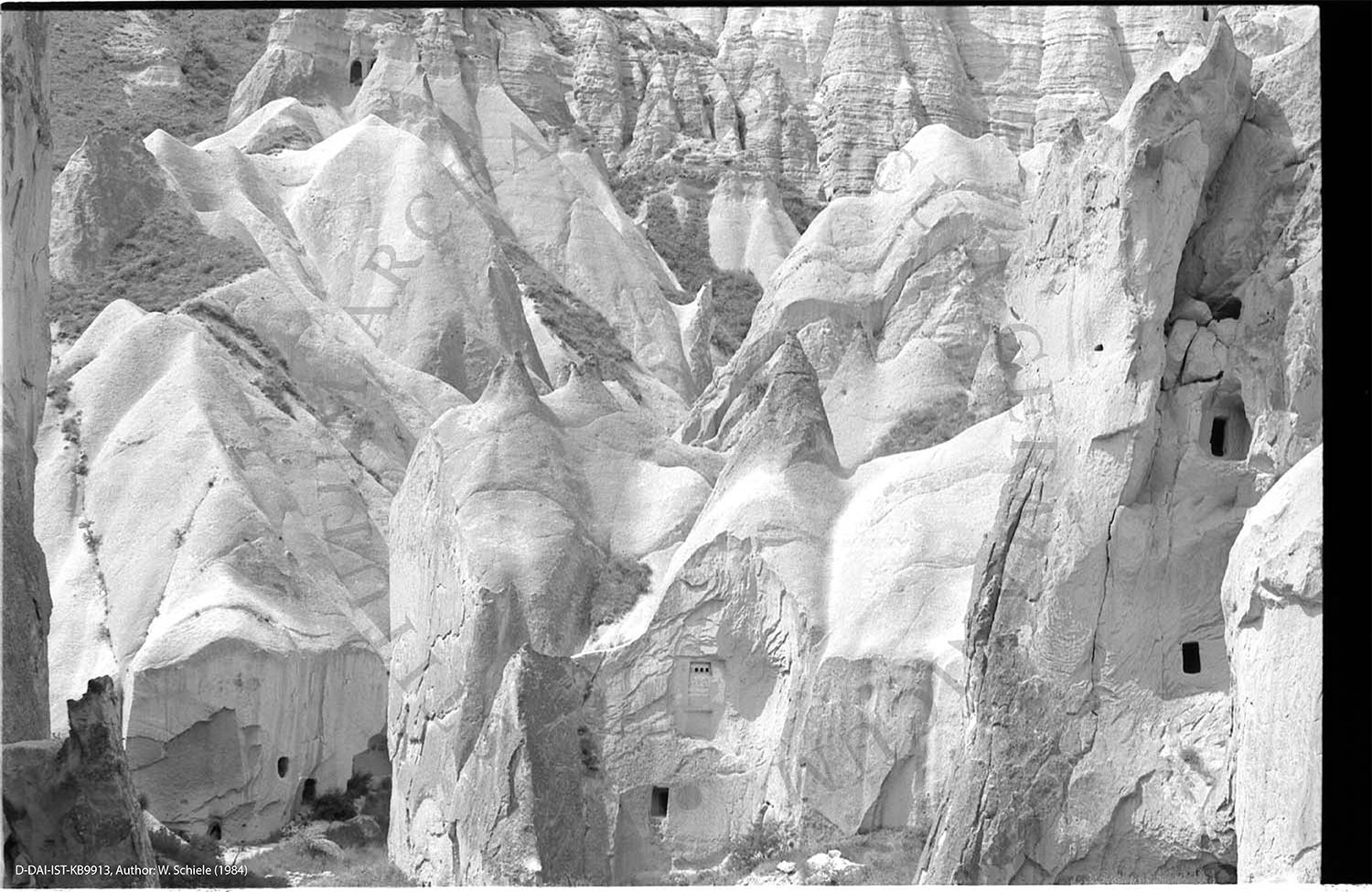
A scenic view of Zelve in Cappadocia (D-DAI-IST-KB9913, W. Schiele, 1984).
But one day, I had an accident. My camera stopped working due to damage to the electronic system, when I accidently hit the camera climbing the rocks. After that, it was not possible to work on my project and the only way was to fix or get a new camera. I then found an overnight bus to Istanbul — the only place to fix the camera. I went to a repair photo shop and was told that it is not possible to fix my camera and needed change its electronic system. So, I had to buy a new camera.
Fortunately, before I went to Cappadocia, I met the director of the Archaeological museum Nuşin Asgari. I went to see her and get her advice where to buy a new camera in Istanbul. She met me graciously and suggested to go to the German Archaeological Institute and see the photographer Wolf Schiele.
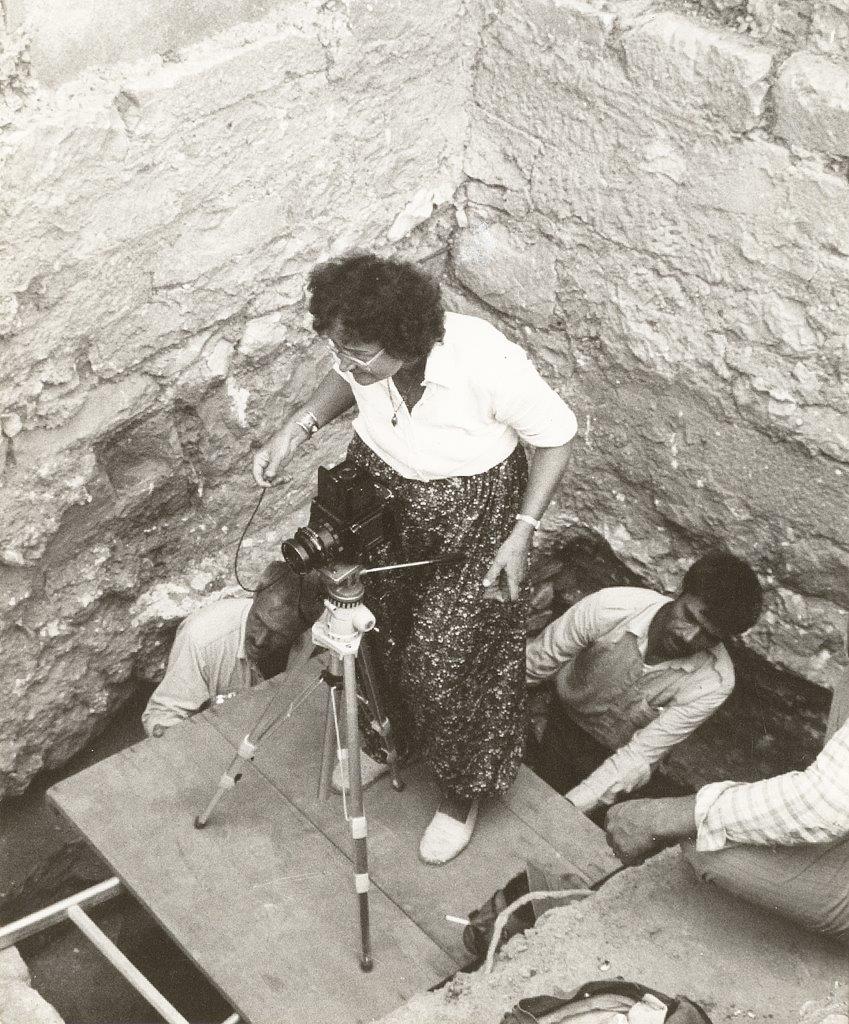
Renate Schiele working with her Hasselblad camera, which Natalia had borrowed (Author: unknown).
According to her, he was the best photographer who knows everything about cameras. Next morning I went to the German Archaeological Institute and fortunately Mr. Schiele was in his photo studio. He kindly listened to my problems and said: “Well, I do not recommend you buy a camera in Istanbul.” I told him that without the camera and photographs, I will not be able to work on my dissertation. Mr. Schiele thought for a while and said: “I have my wife’s Hasselblad camera. She is away for two months, so you can have it for two months but you should return it before she arrives.”
It was a bold big camera in a beautiful brown leather cover. I never held a Hasselblad in my hands and did not have film for a large size camera. Wolf Schiele gave me useful tips on how to use the camera and gave me film for it. (I do not remember now whether I paid for it, but I probably I did). He wrote all instructions about how to use the camera. The only thing he said was “You have to return this camera in two months.”
I thanked Mr. Schiele and went back to Göreme. Working with Hasselblad was a special experience. I was watching it every minute and was afraid to make a scratch on a beautiful leather cover. At the end, the Hasselblad negatives produced the most beautiful pictures, which I donated after my retirement to Dumbarton Oaks, Washington DC, where I worked for 21 year as a Curator of Photograph and Fieldwork Archives.
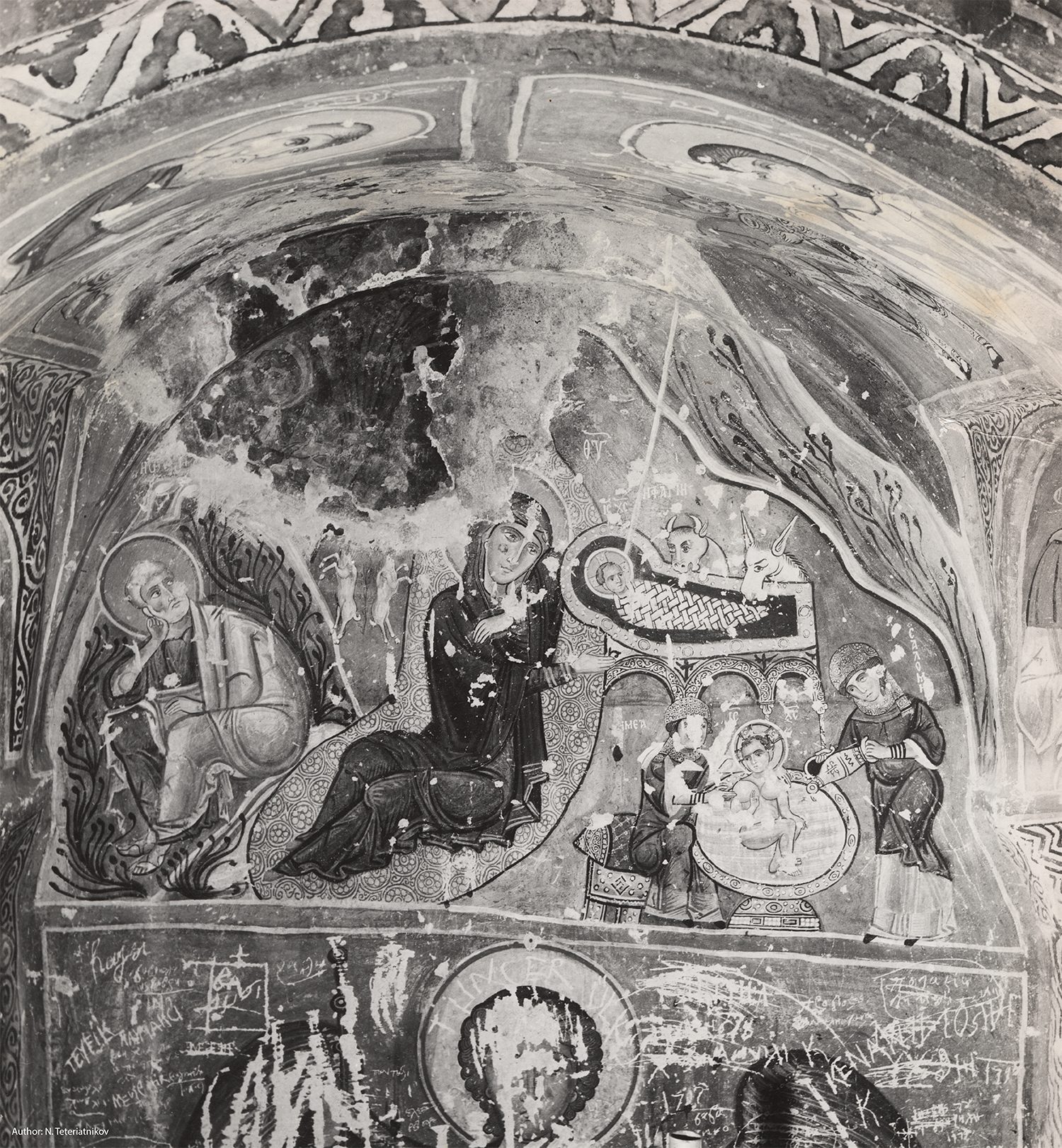
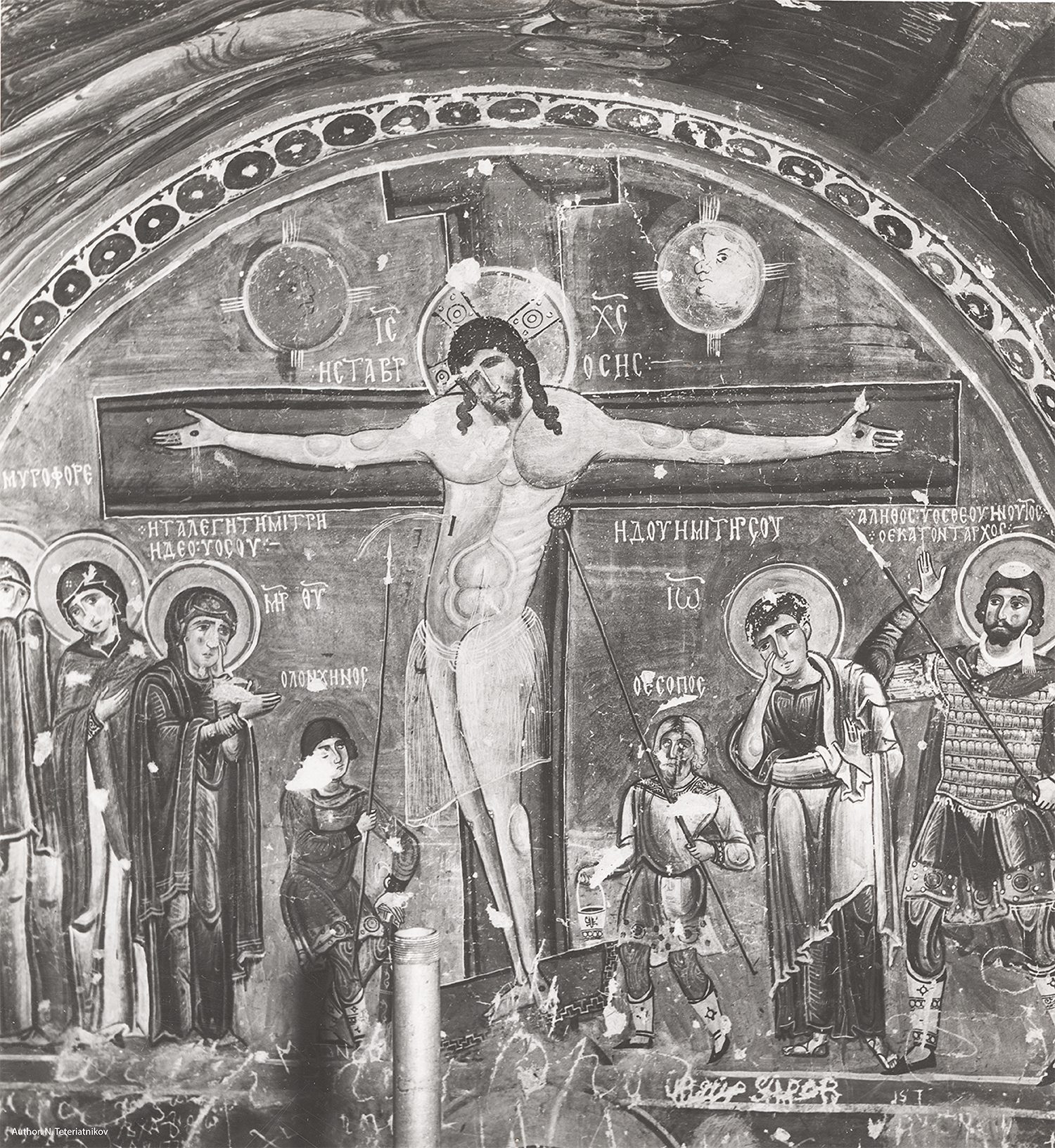
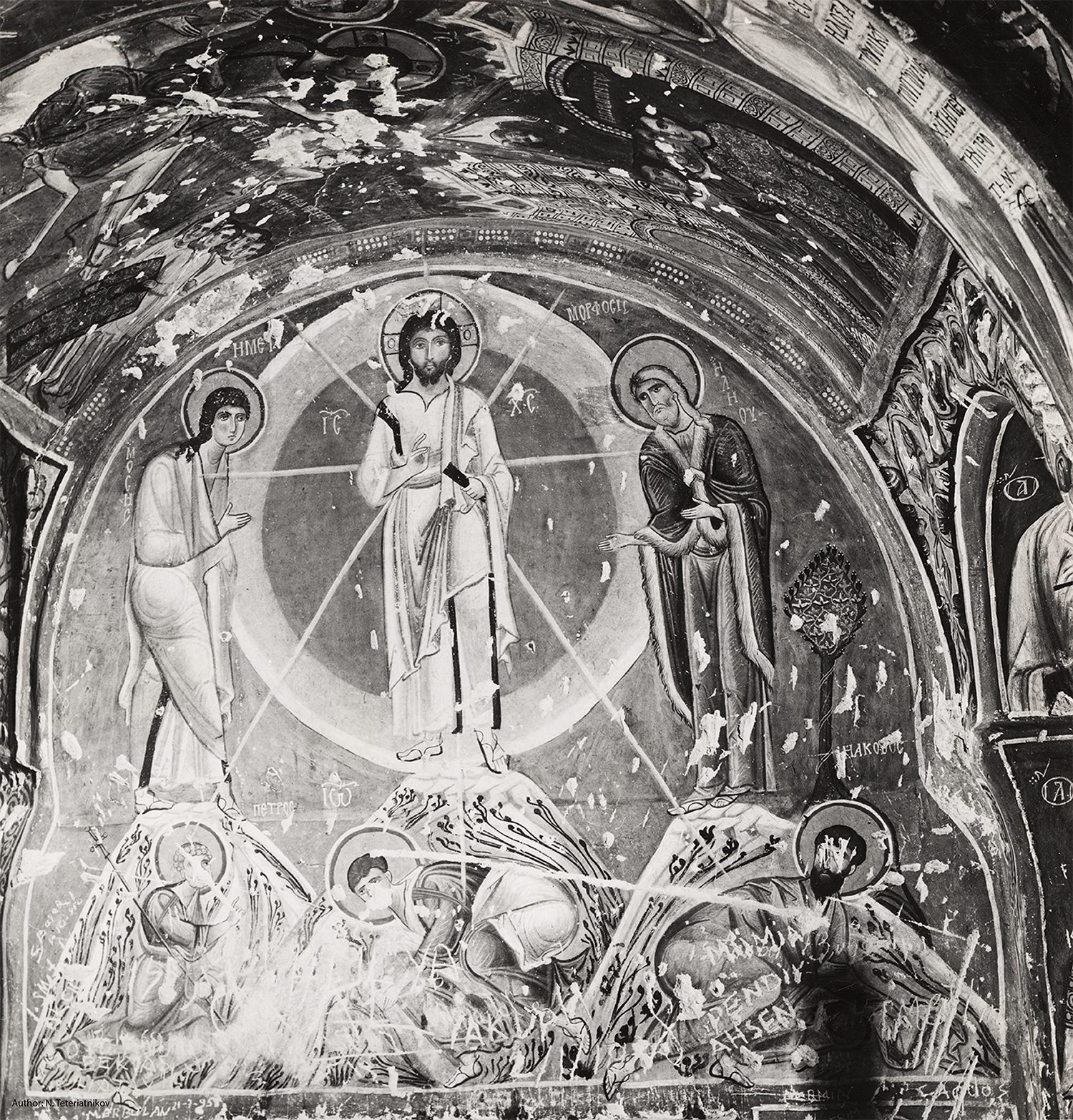
The photographs taken by Natalia with Renate’s Hasselblad camera. (N. Teteriatnikov, 1982)
Returning to Mr. Schiele, in two months I went to Istanbul, bought a box of chocolates and went to the German Archeological Institute. Unfortunately, he was not there. I left the camera and the chocolates for him in his office and left.
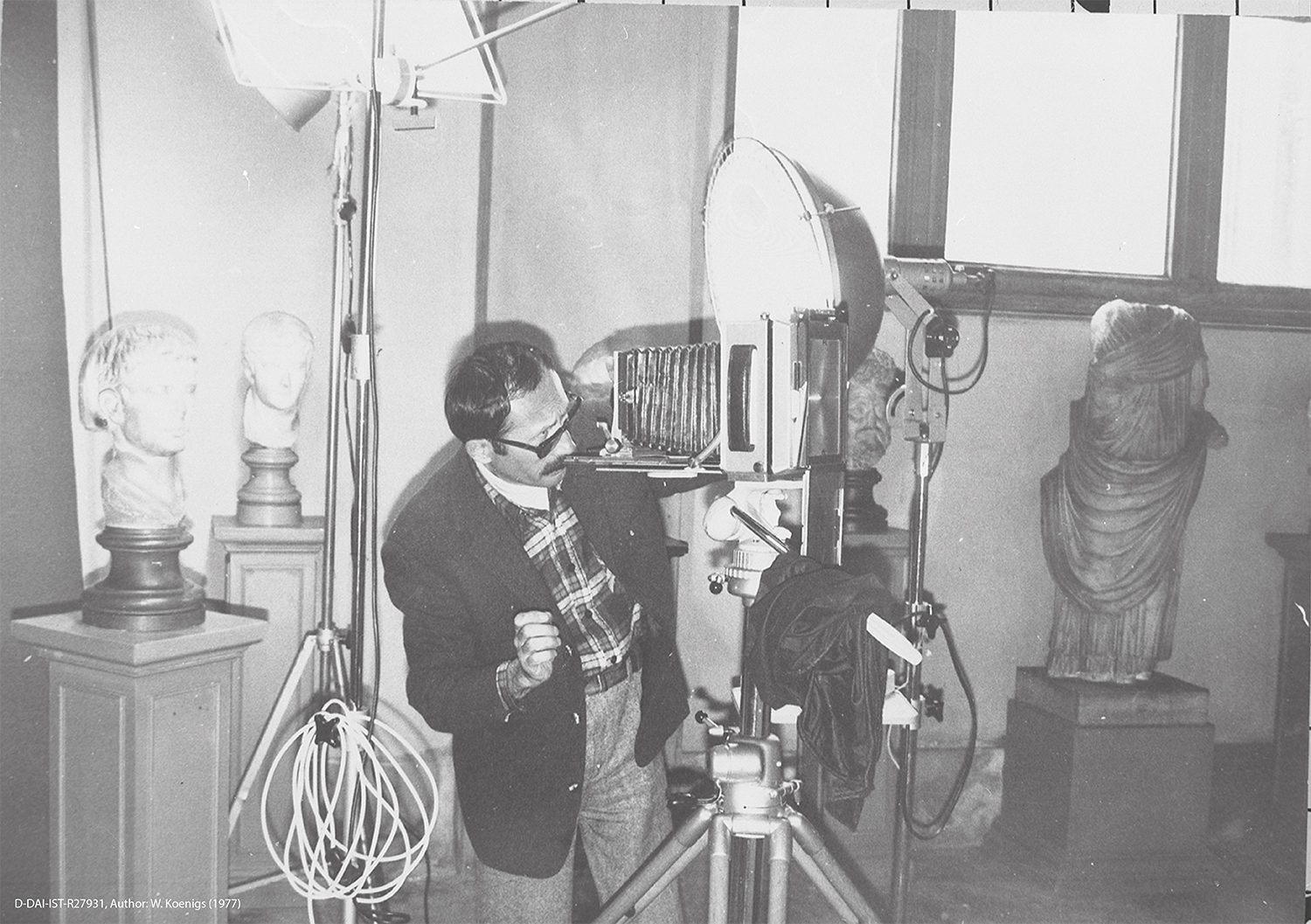
While Wolf Schiele was working at the Istanbul Archaeological Museum (W. Koenigs, 1977).
Since that time he is always in my memory as a most generous and kind person, who saved my dissertation.
Natalia Teteriatnikov