Looking back on 2025
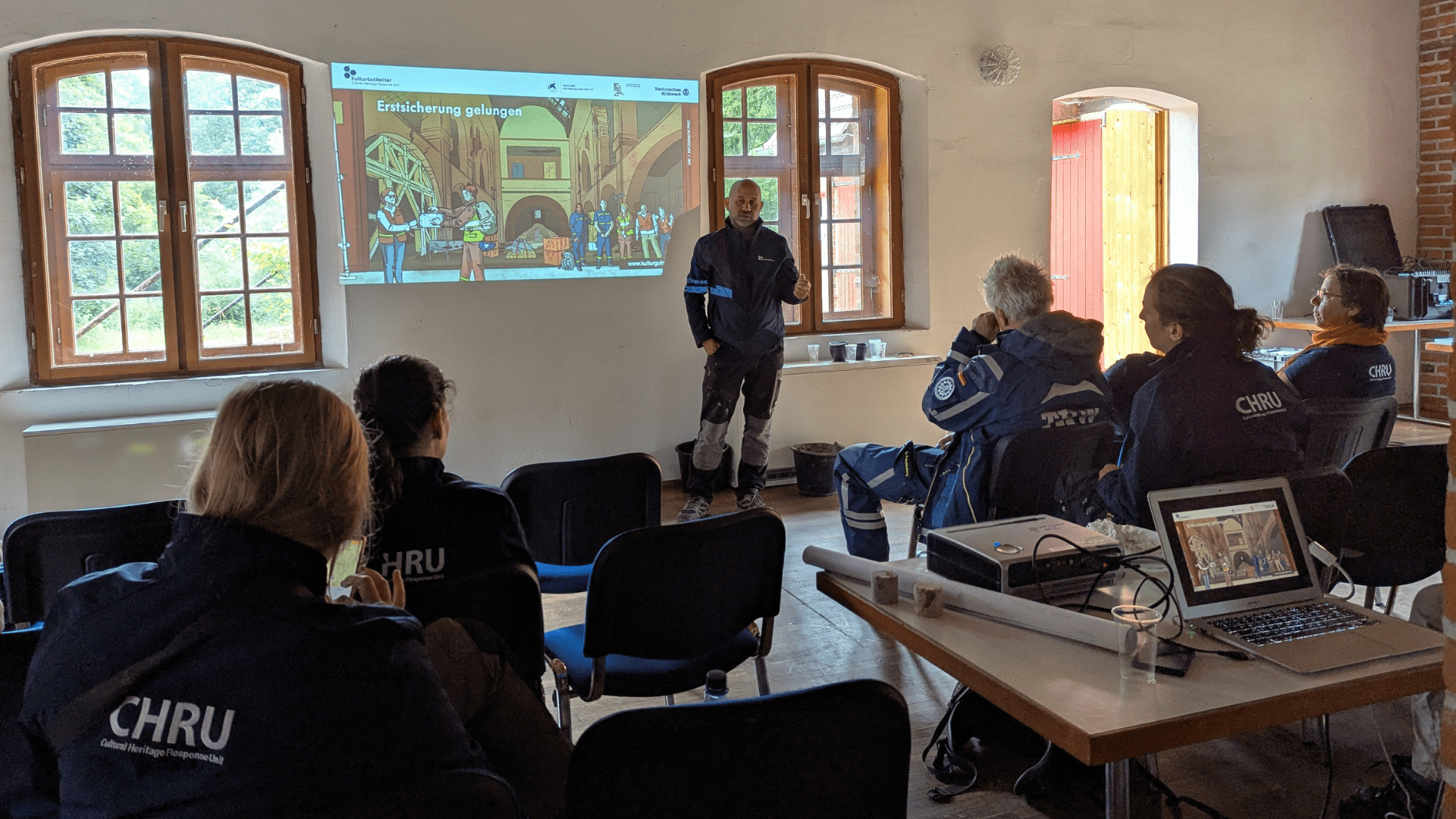
In 2025, KulturGutRetter continued and intensified the training of CHRU volunteers that had begun the previous year. At the same time, national and international exchanges were maintained to promote the […]
Im Jahr 2025 hat KulturGutRetter die 2024 begonnene Ausbildung der Freiwilligen des CHRU fortgesetzt und intensiviert. Parallel wurde der nationale und internationale Austausch fortgesetzt, um die Integration des Kulturgutschutzes in […]
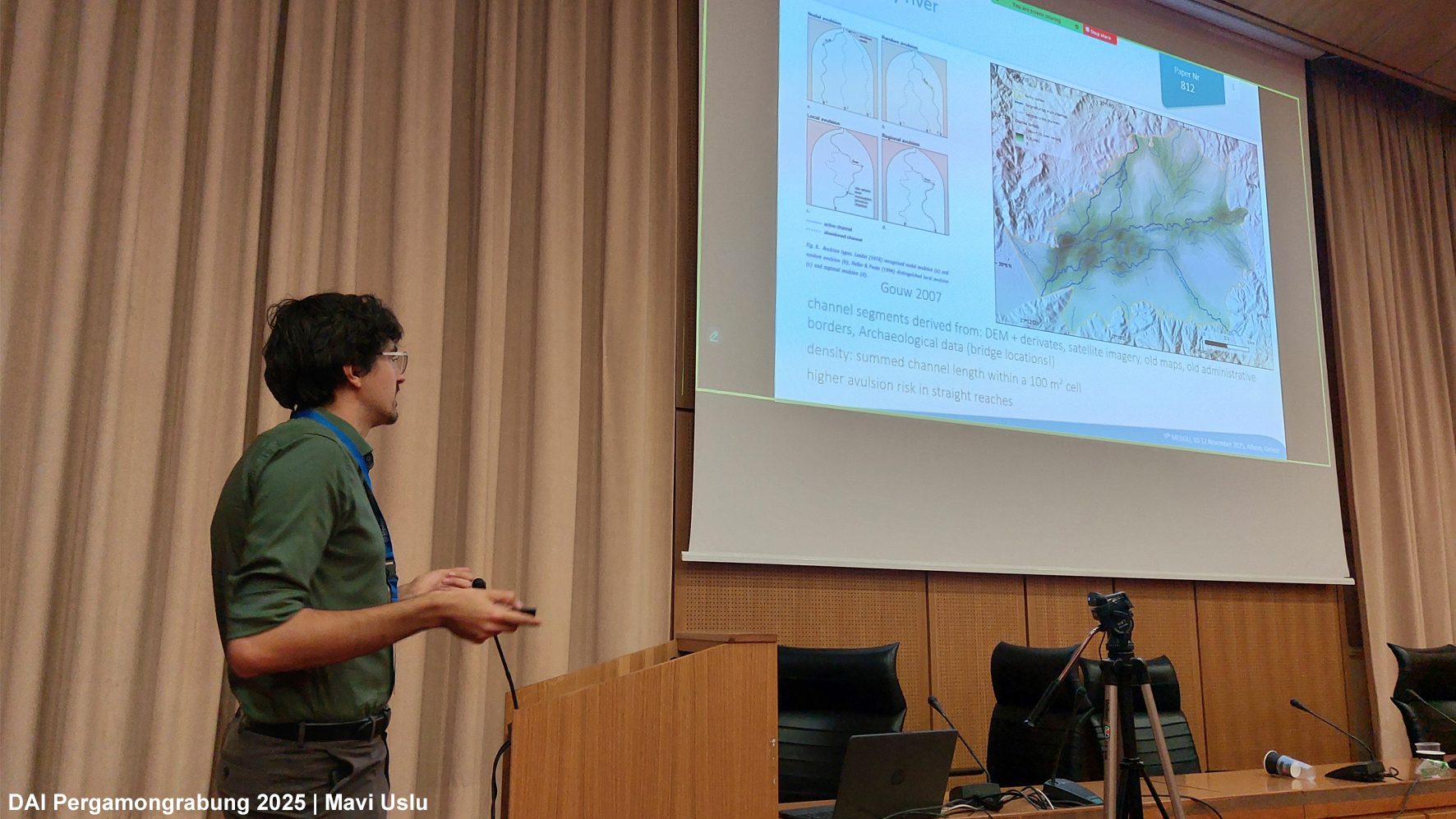
Last year’s annual meeting of the Mediterranean Geoscience Union (MedGU) took place from 10–12 November in Athens, right across the Aegean Sea from the Pergamon – a perfect opportunity to present results from the Micro-Region in a broader context and make larger-scale comparisons.
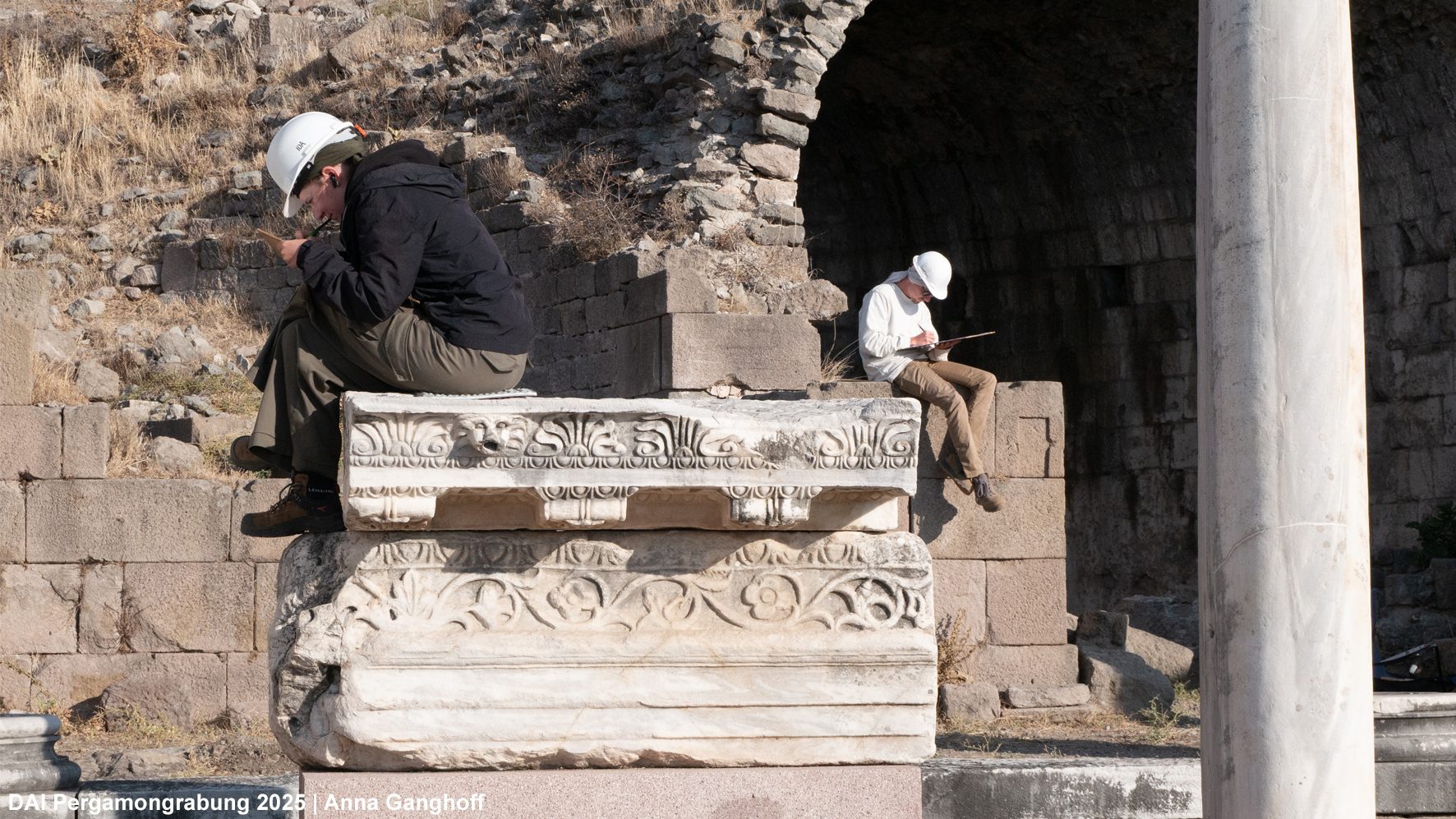
Der Methodenkompetenz kommt in der Bauforschung ein großer Stellenwert zu, da diese – ähnlich wie die Archäologie – keine rein theoretische Fachdisziplin ist, sondern zusätzlich auch praxis- und anwendungsbezogene Komponenten aufweist. So bietet das DFG-Langfristprojekt TransPergMikro den einzigartigen wissenschaftlichen Rahmen für die Vertiefung der Methoden und Ziele der Bauforschung als Teil der interdisziplinären und internationalen Kooperation mit der Klassischen Archäologie und Physischen Geographie ab der frühen Karrierephase.
In 2025, two in-depth specialist workshops were organised for volunteers from the CHRU’s Immovable Cultural Assets (ICA) and Movable Cultural Assets (MCA) units. Participants were encouraged to improve their knowledge […]
Für die Freiwilligen der Einheiten „Immovable Cultural Assets (ICA)” und „Movable Cultural Assets (MCA)” der CHRU wurden im Jahr 2025 zwei vertiefende Fachausbildungen organisiert. Ziel dieser Veranstaltungen ist es, die […]
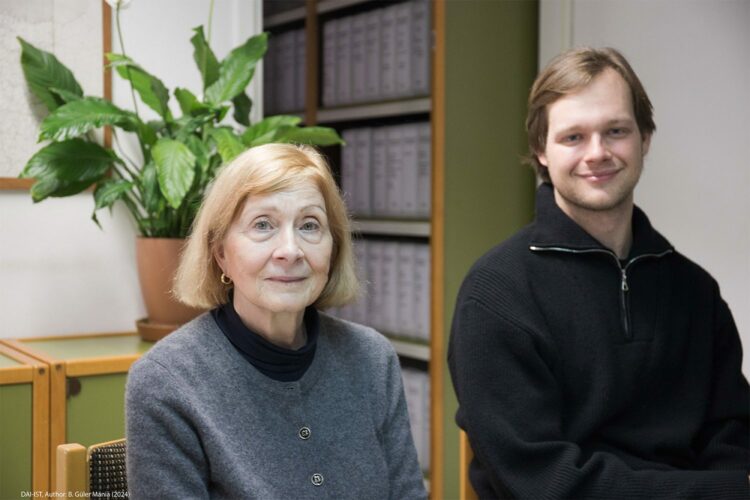
Years ago, in the days of analog photography, Natalia Teteriatnikov entered the photographic archive of the Istanbul Department of the German Archaeological Institute in a rather challenging situation. She had […]
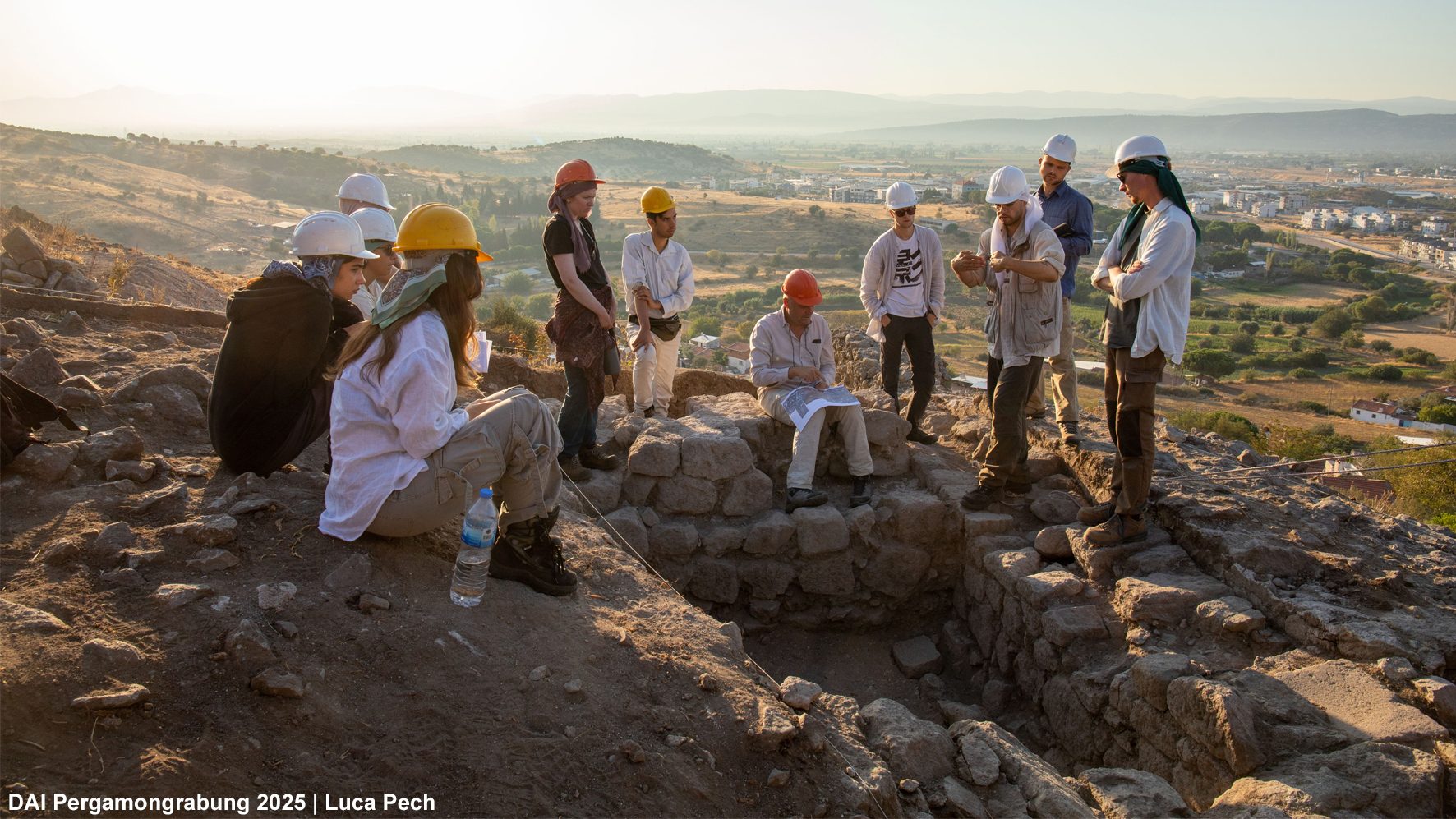
Aus der Fundbearbeitung erzählt Emma Gronwold, die als Bachelorstudentin sechs Wochen vor Ort war; von der Ausgrabung berichtet Luca Pech, ebenfalls Bachelorstudent, der acht Wochen als Schnittleiter tätig war; und Berglind Hatje, Doktorandin im Surveyprojekt, gibt Einblicke in ihre Arbeiten im Rahmen des Projekts.
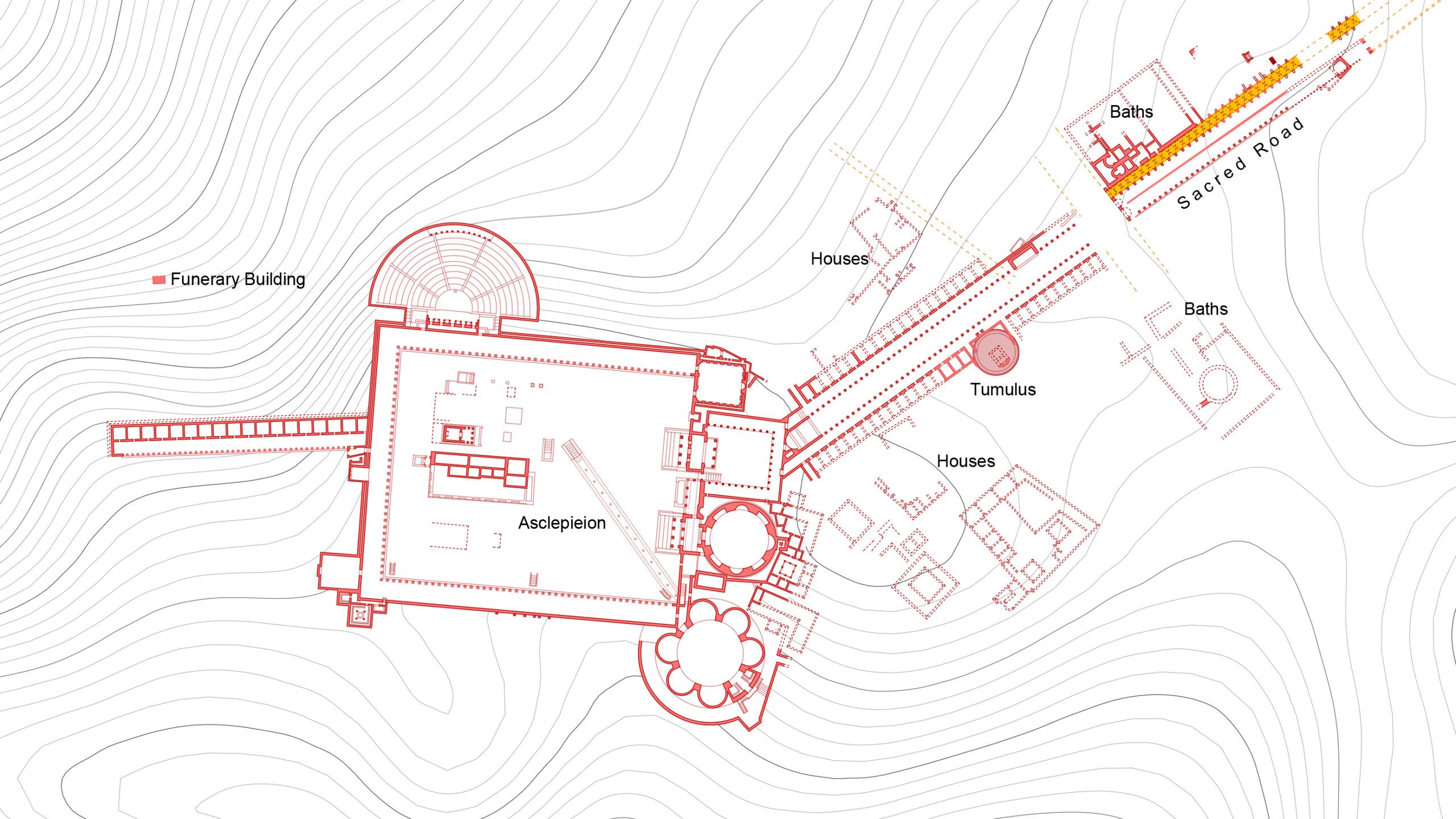
Five years after the publication of the first Pergamon Digital Map in November 2020, the new Pergamon Digital Map 2 (2025) is now available. This updated and expanded edition represents a major step forward in documenting, visualizing, and sharing the archaeological landscape of ancient Pergamon and its peri-urban area.
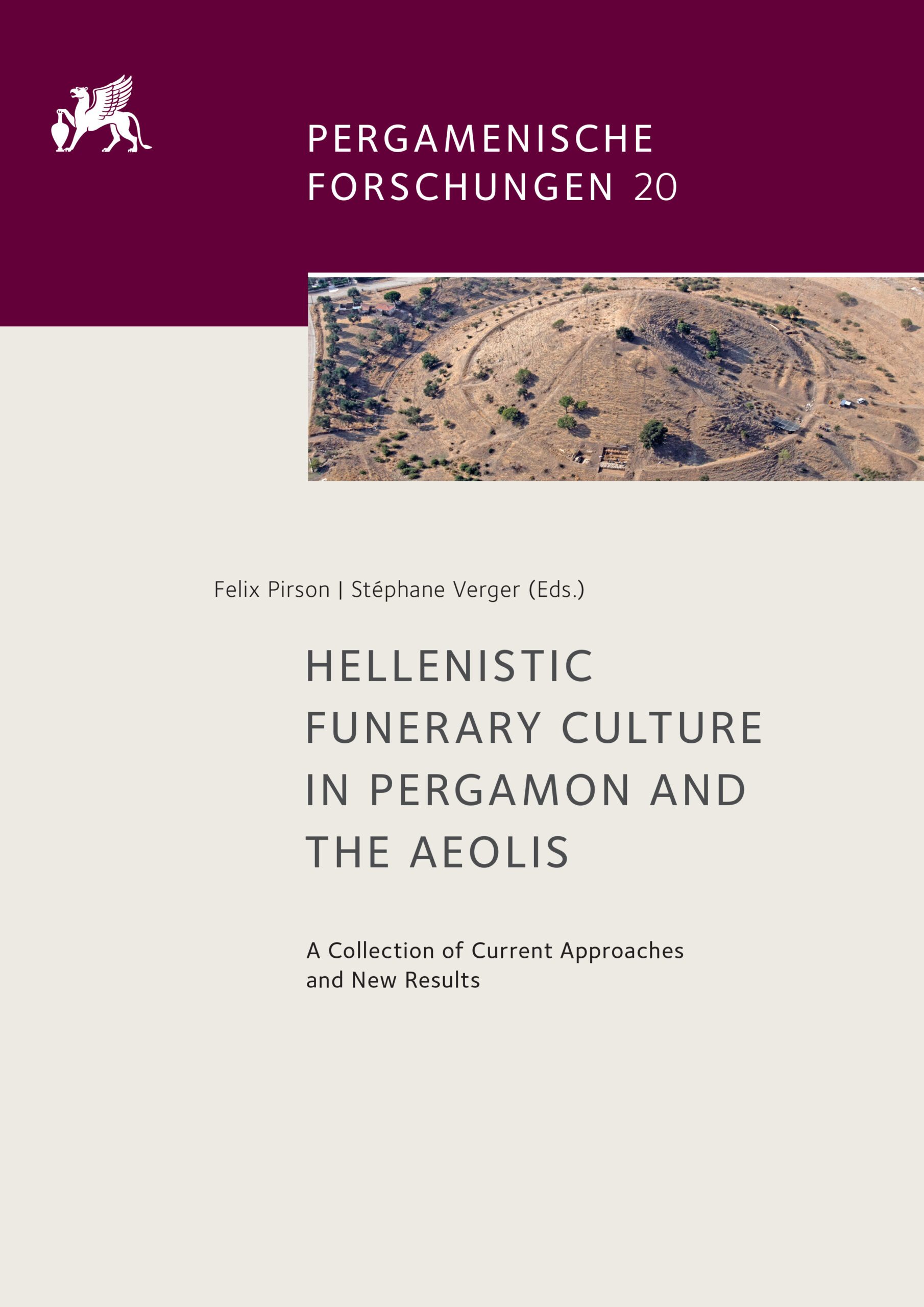
The volume brings together sixteen contributions examining funerary landscapes, inscriptions, human remains, and burial practices in Pergamon and the Aeolian cities of Aigai, Kyme, and Elaia, as well as in Mytilene and Antandros.
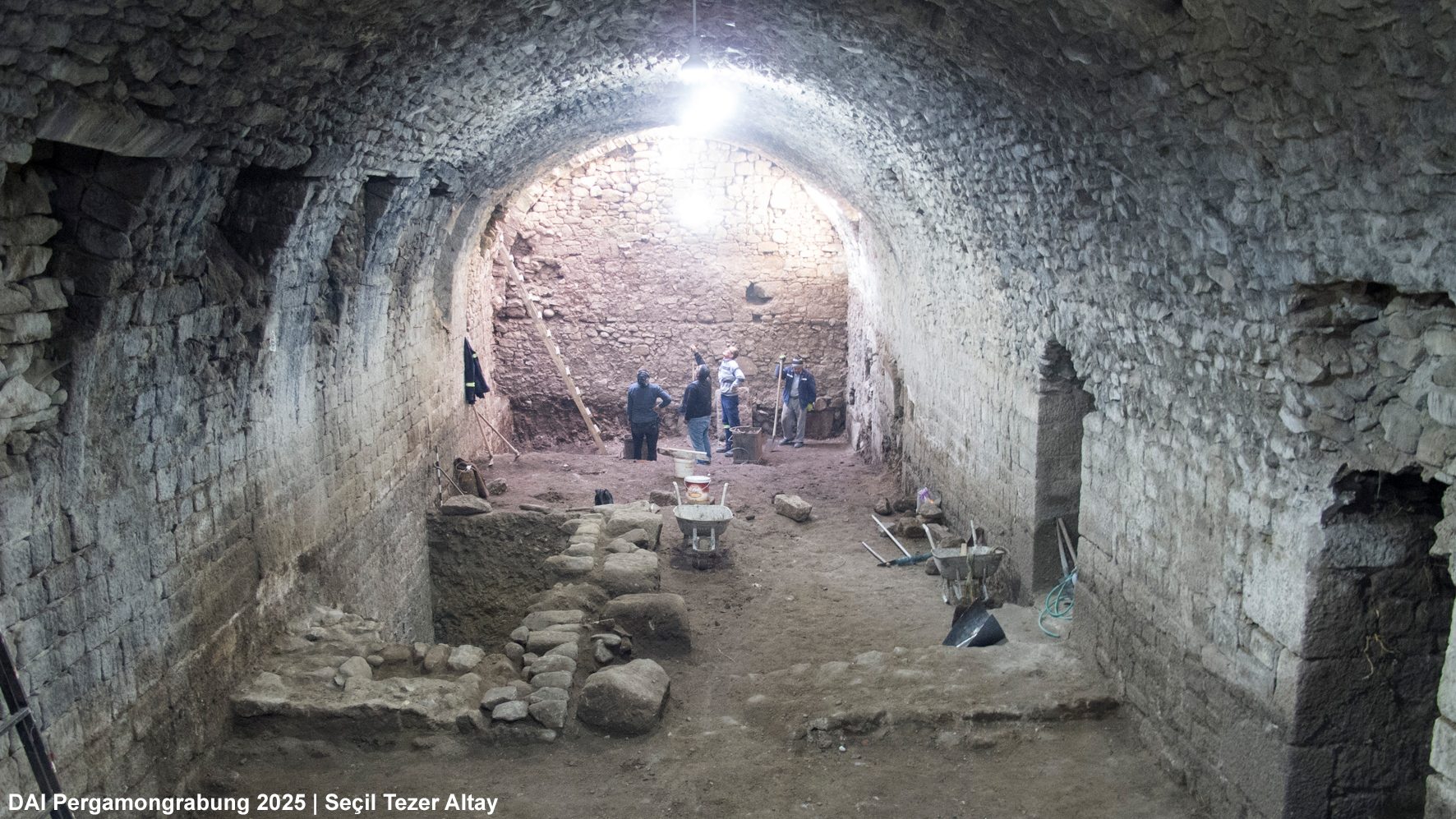
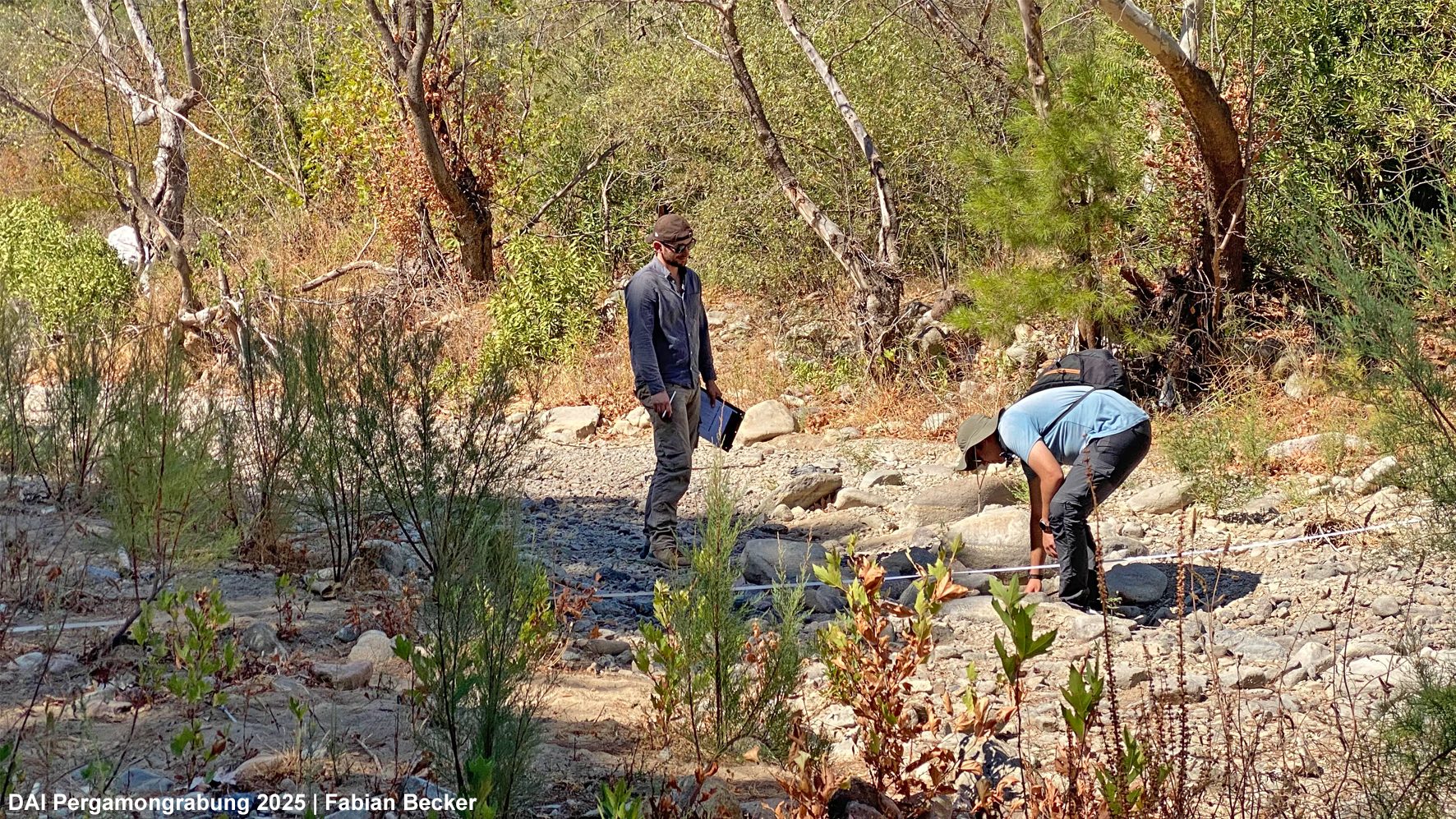
This season’s fieldwork explored the Selinus Valley upstream of ancient Pergamon, tracing how the river shaped – and was shaped by – human activity. Using geomorphological methods, drilling cores, and pebble counts, the team investigated past fluvial dynamics, flood histories, and modern alterations to understand the evolving relationship between landscape and settlement in the Pergamon Micro-Region.
by Sina-Marie Hahn Dr. Céline Maicher (Chrono-environnement Laboratory in Besançon and University Marie and Louis Pasteur) (Photo: Sina-Marie Hahn (RGK) // DAI + RGK). Dr. Céline Maicher, associate researcher at […]
by Sina-Marie Hahn Dr. Hristijan Talevski, Senior Research Associate at the Public Research Institution Institute of Old Slavic Culture – Prilep, North Macedonia, is one of three grant holders conducting research at […]
by Sina-Marie Hahn The German Archaeological Institute (DAI) promotes young scholars, international exchange, and cooperation with partner institutions. Scholarship programmes, research support and extended research stays at its library the […]
A new study sheds light on the transformation from the Hellenistic to the Roman Imperial period by demonstrating the impact of increased human activity on soil erosion and alluvial fan growth.
Starke J, Doğan M, Ludwig B, Nykamp M, Schütt B, Becker F (2025): Alluvial fan development mirrors settlement dynamics in the peri-urban surroundings of ancient Pergamon, western Türkiye. Mediterranean Geoscience Reviews