The DAI istanbul Newsletter
We would like to bring your attention to our DAI istanbul Newsletter. Once a month we bring you bundled all the latest information from our department and projects, including announcements […]
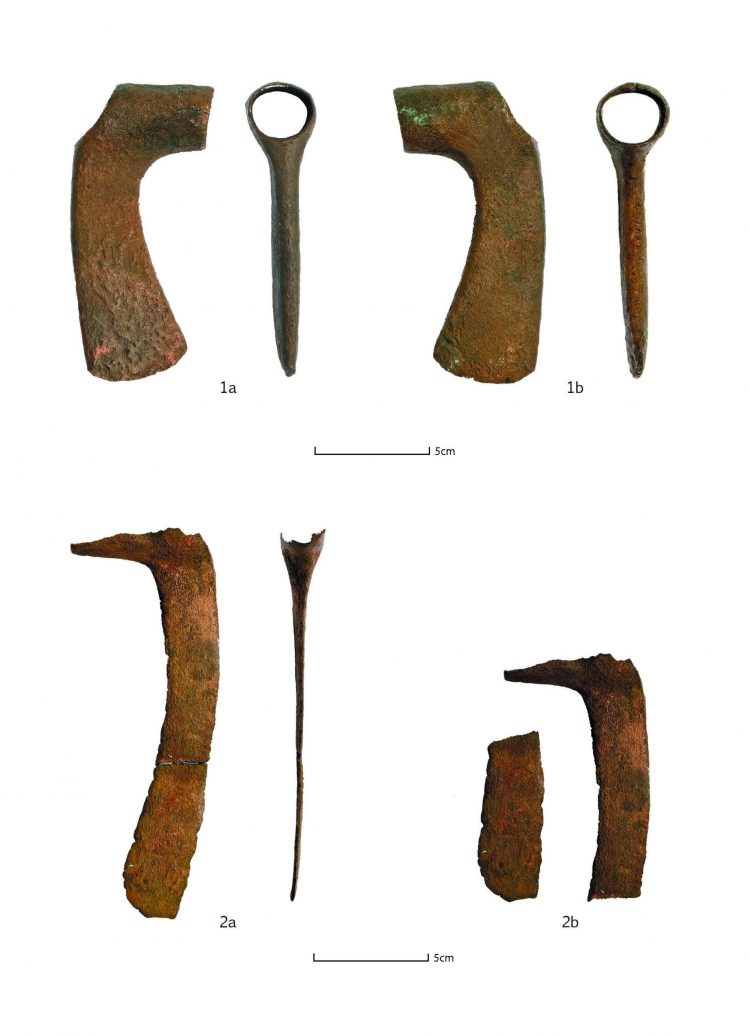
Bátora hat in mehreren Arbeiten die Kulturverbindungen zwischen Karpaten und Kaukasus untersucht. So lag es nahe, über zwei Horte mit Metallgegenständen aus Georgien zu schreiben, die in die erste Hälfte des 3. Jahrtausends v. Chr. datiert werden können. Solche Horte werden von der neueren Forschung als Weihgaben an die übernatürlich gedachten Mächte gedeutet. Beide Horte wurden am linken Ufer des Flusses Dzirula gefunden.
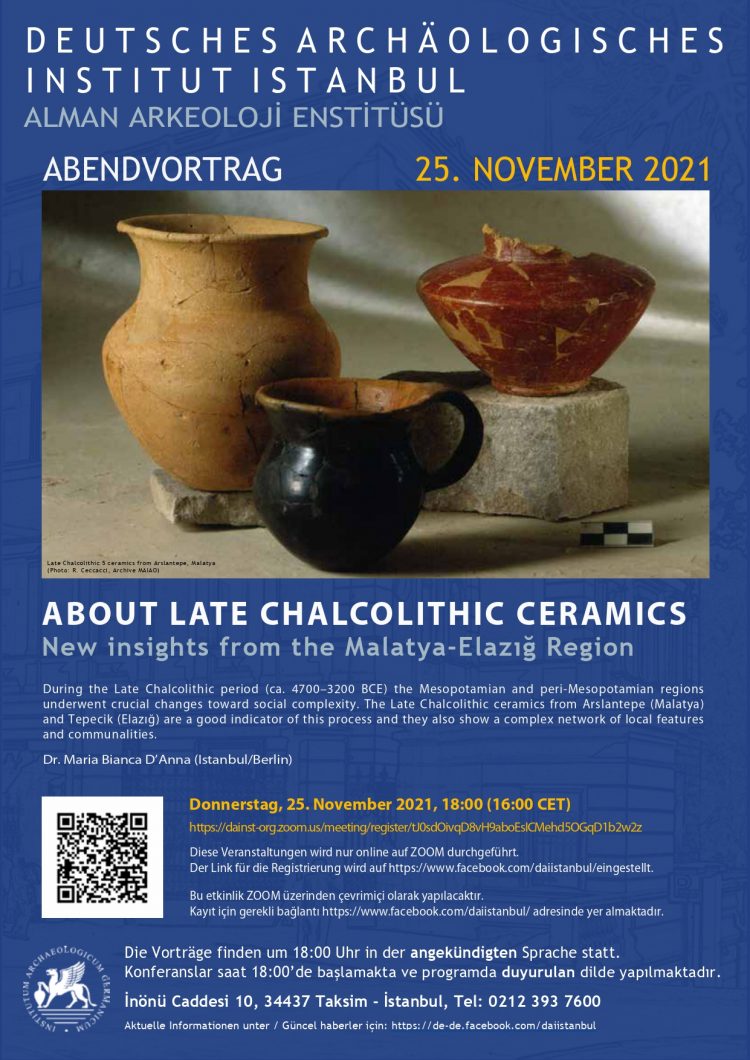
During the Late Chalcolithic period (ca. 4700–3200 BCE) the Mesopotamian and peri-Mesopotamian regions underwent crucial changes toward social complexity. The Late Chalcolithic ceramics from Arslantepe (Malatya) and Tepecik (Elazıg) are […]
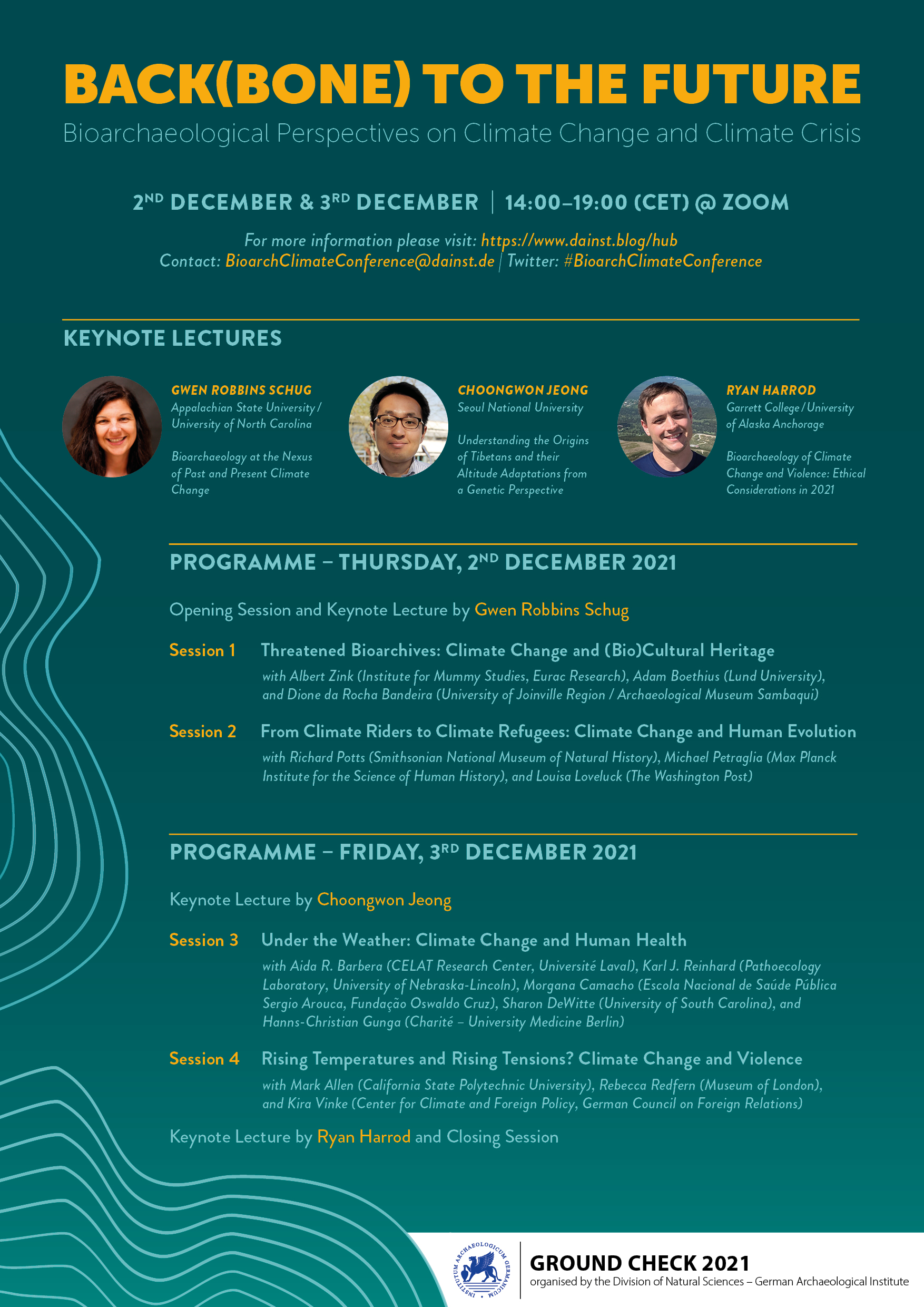
#BioarchClimateConference #Bioarchaeology #Paleopathology #ClimateChange #ClimateCrisis #NaturalSciences_DAI @dai_weltweit The Human Bioarchaeology Unit of the Division of Natural Sciences of the German Archaeological Institute (DAI) is organising an online conference about long-term […]
Archäologen sind nicht ständig auf der Suche nach dem nächsten großen Schatz, sie sitzen auch nicht immer mit dem Pinsel in der Hand im Sand. Auf vielfältige Weisen versuchen sie unermüdlich neues Wissen über die kulturelle Entwicklung der Menschheit zu erlangen und zu bewahren. Manchmal sogar ohne ein einziges Sandkorn zu bewegen.
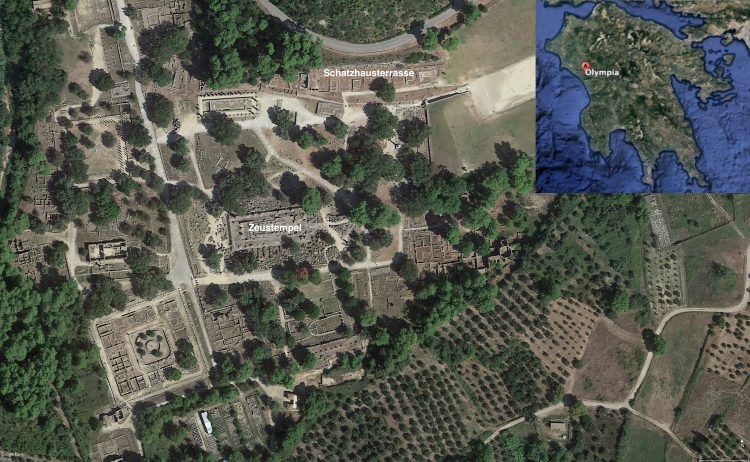
Ein Projekt aus Olympia – Ein Beitrag von Sophie Preiswerk

von Kerstin P. Hofmann, Kerstin Kowarik, Hans Reschreiter, Roman Scholz Im Rahmen einer neuen Zusammenarbeit mit dem Naturhistorischen Museum Wien wird die Produktions- und Ressourcenlandschaft des eisenzeitlichen Salzbergwerkes Hallstatt gemeinsam […]
Our new lecture programme 2021/ 2022 is now online! Lectures will take place on Thursday evenings at 18.00 hrs (Istanbul time). Information about the events will be shared on our […]
„Lebenswirklichkeiten“ von Menschen auf Elephantine vor 3.800 Jahren – Ein Beitrag von Britta Wagner
Kurzberichte zu den aktuellen Forschungen der Jahre 2020 und 2021
D-DAI-IST-KB25688, Author unknown (1938) Because the excavation season is coming to an end, the photo of the month of October shows a scene from the excavation house of Priene. There […]
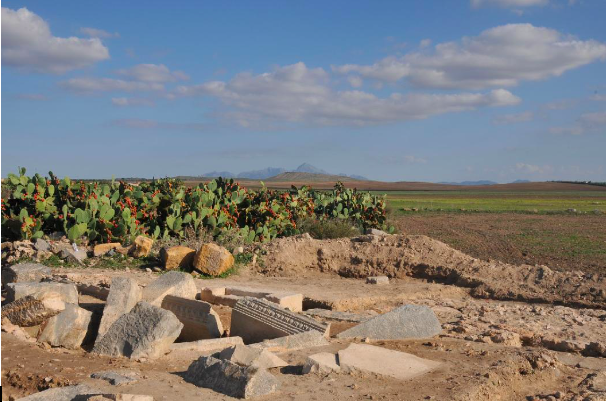
Since 2019, a German-Turkish team of the DFG-funded TransPergMikro project on the “Transformation of the Pergamon Micro-Region between Hellenism and the Roman Imperial Period” has been investigating selected areas in the vicinity of Pergamon. This year, the team focused mainly on the transition zone between the eastern foothills of the Kara Dağı (Kane) peninsula and the western lower Bakırçay (Kaikos) plain.
Copyright University of Cologne Prähistorisches Kolloquium am Institut für Ur- und Frühgeschichte der Universität zu Köln Das Institut für Ur- und Frühgeschichte der Universität Köln lädt auch in diesem Wintersemester […]
Copyright University of Cologne Colloquium at the Department of Prehistoric Archaeology of the University of Cologne The Department of Prehistoric Archaeology at the University of Cologne invites you to its […]
These are the results of a study led by paleogeneticist Ludovic Orlando, CNRS, who headed an international team in cooperation with partners from the Eurasia Department of the DAI. Answering a decades-old enigma, the study is published in Nature on 20 October 2021